La Educación Intercultural Bilingüe: El éxito de la enseñanza en lengua indígenas
Intercultural Bilingual Education: The success of teaching in an indigenous language
DOI:
https://doi.org/10.32870/dse.v1i36.1822Abstract
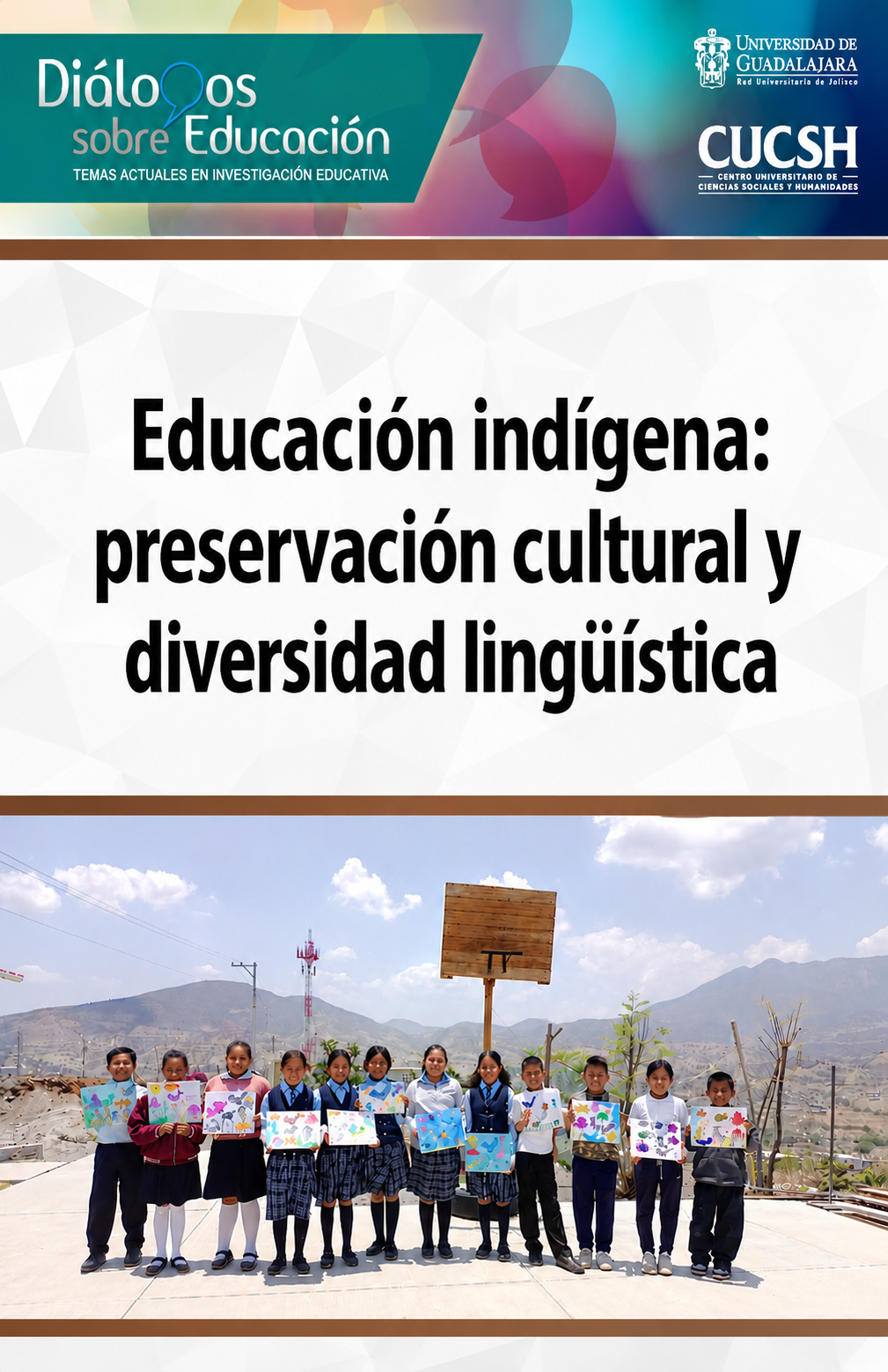
Intercultural Bilingual Education (EIB) in Mexico promotes literacy in indigenous languages and Spanish, as well as cultural coexistence between indigenous and non-indigenous populations. However, in many EIB schools, instruction in indigenous languages is relegated to a separate subject, while the rest of the instruction takes place in Spanish. This study investigated whether Mazahua indigenous students in the State of Mexico, by participating in Mazahua-Spanish bilingual instruction, could improve their writing of complete sentences in Mazahua and Spanish. The number of minutes per week using Mazahua as the language of instruction was increased, while bilingual education strategies were implemented. The Experimental Group showed statistically significant growth in their writing in Mazahua and Spanish. In contrast, a Control Group only grew statistically significantly in their Spanish writing. This study provides preliminary data on the success of EIB when the indigenous language is used as the language of instruction. Recommendations for future studies and implications for instruction are included.
Downloads
References
Ayala Reyes, S. (2022). La asignatura de Lengua y Cultura Ch’ol en secundarias de Tabasco, México y la semántica contradictoria de la educación intercultural. Runa, 43(1), 189–209. https://doi.org/10.34096/runa.v43i1.10057
Asher, J. J. (1981). The total physical response: Theory and practice. Annals of the New York Academy of Sciences, 379, 324–331. https://doi.org/10.1111/j.1749-6632.1981.tb42019.x
August, D., McCardle, P., & Shanahan, T. (2014). Developing literacy in English language learners: Findings from a review of the experimental research. School Psychology Review, 43(4), 490–498.
August, D., & Shanahan, T. (Eds.). (2006). Developing literacy in second-language learn-ers: Report of the National Literacy Panel on language-minority children and youth. Erl-baum.
Baker, C., & Wright, W. E. (2017). Foundations of Bilingual Education and Bilingualism (6th ed.). Multilingual Matters.
Barrios Hernández, B. & Miquel Hernández, M. (2023). Elementos culturales en la enseñanza del náhuatl en La Resurrección. Revista Scientific, 8(29), pp. 122-143. https://doi.org/10.29394/Scientific.issn.2542-2987.2023.8.29.6.122-142
Beeman, K., & Urow, C. (2013). Teaching for biliteracy: Strengthening bridges between languages. Caslon.
Bromham, L., Dinnage, R., Skirgård, H., Ritchie, A., Cardillo, M., Meakins, F., Greenhill, S., & Hua, X. (2022). Global predictors of language endangerment and the future of lin-guistic diversity. Nature Ecology & Evolution, 6, 163-173. https://doi.org/10.1038/s41559-021-01604-y
Castro Azuara, M. C., Hernández Ramírez, L. A., & Nava Nava, R. (2022). Hacia una metodología integral para el desarrollo de la literacidad en la educación intercultural bilingüe. Folios, 55, 185-198. https://doi.org/doi.org/10.17227/folios.55-12958
Celote Preciada, A. (2024). El mundo mazahua y la construcción de la interculturalidad. Universidad Intercultural del Estado de México.
De León, L. (2017). Indigenous language policy and education in Mexico. En T.L. McCarty & S. May (Eds.), Language Policy and Political Issues in Education (pp. 415-433). https://doi.org/10.1007/978-3-319-02320-5_31-1
Escamilla, K., Hopewell, S., Butvilofsky, S., Sparrow, W., Soltero-González, L., Ruiz-Figueroa, O., & Escamilla, M. (2014). Biliteracy from the start: Literacy Squared in action. Caslon.
Fairbairn, S., & Jones-Vo, S. (2019). Differentiating instruction and assessment for English language learners: A guide for K-12 teachers (2nd ed.). Caslon.
García, O., & Wei, L. (2014). Translanguaging: Language, bilingualism and education. Palgrave Macmillan Pivot.
Genesse, F. (2004). What do we know about bilingual education for majority language students? In T. K. Bhatia & W. Ritchie (Eds.), Handbook of bilingualism and multiculturalism (pp. 547–576). Blackwell.
Hamel, R. E., Erape Baltazar, A. E., & Márquez Escamilla, B. (2018). La construcción de la identidad p’urhepecha a partir de la educación intercultural bilingüe propia. Trabalhos em Linguística Aplicada, 57(3), 1377-1412. http://dx.doi.org/10.1590/010318138653739444541
Himmel, J. (2012). Language objectives: The key to effective content area instruction for English learners. Colorín Colorado. https://www.colorincolorado.org/article/language-objectives-key-effective-content-area-instruction-english-learners Accedido 8/26/2024.
Hindman, A. H., Wasik, B. A., & Anderson, K. (2022). Using turn and talk to develop language: Observations in early classrooms. The Reading Teacher, 76(1), 6-13.
Instituto Nacional de Lenguas Indígenas (2016). Mazahua. Atlas de las Lenguas Indígenas Nacionales de México. https://atlas.inali.gob.mx/agrupaciones/info/0502
Kriete, R., & Davis, C. (2014). The morning meeting book (3rd ed.). Center for Responsive Schools.
Limón Mendoza, E. & Hernández Limonchi, M. del P. (2023). La educación bilingüe e intercultural en un pueblo totonaco. Revista Latinoamericana de Estudios Educativos, 53(3), pp. 157-181. https://doi.org/10.48102/rlee.2023.53.3.571
Lindholm-Leary, K. (2001). Dual language education. Multilingual Matters.
Maslow, A. H. (1943). A theory of human motivation. Psychological Review, 50(4), 370–396. https:// https://doi.org/10.1037/h0054346
Neuman, S. B., Kaefer, T., & Pinkham, A. (2014). Building background knowledge. The Reading Teacher, 68(2), 145-148.
Nigh, R., & Bertely, M. (2018). Conocimiento y educación indígena en Chiapas, México: Un método intercultural. Diálogos sobre Educación, 9(16), 1-22.
Relyea, J. E y Amendum, S.J. (2020). English reading growth in Spanish-speakink bilingual students: Moderating effect of English profic on cross-linguistic influence. Child Development, 91 (4), 4.
Wright, T. S. (2019). Reading to learn from the start: The power of interactive read-alouds. American Educator, 42(4), 4.
Wright, W. E., & Choi, W. (2024). DLBE program types for different target populations. In J. A. Freire, C. Alfaro, & E. J. De Jong (Eds.), The Handbook of Dual Language Bilingual Education (pp. 94–114). Routledge.
Vergara Fregoso, M. (2021). De la educación indígena a la educación intercultural en México, Colombia y Guatemala. Debates, reflexiones y retos. Utopía y Praxis Latinoamericana, 26(95), 11–23.
Viveros-Márquez, J., & Moreno-Olivos, T. (2014). El enfoque intercultural bilingüe y su impacto en la calidad de la educación indígena: Estudio de caso. Ra Ximhai, 10(3), 55–73.
Downloads
Published
Issue
Section
License
Copyright (c) 2026 Universidad de Guadalajara

This work is licensed under a Creative Commons Attribution-NonCommercial 4.0 International License.
Once a manuscript is accepted for publication in the journal, its author(s) must sign a letter transferring the editorial rights to the University of Guadalajara for the editing, publication and dissemination of the paper. After being notified of its publication, the author(s) will be sent a letter of transfer of rights which must be signed and sent back to the journal’s editor.